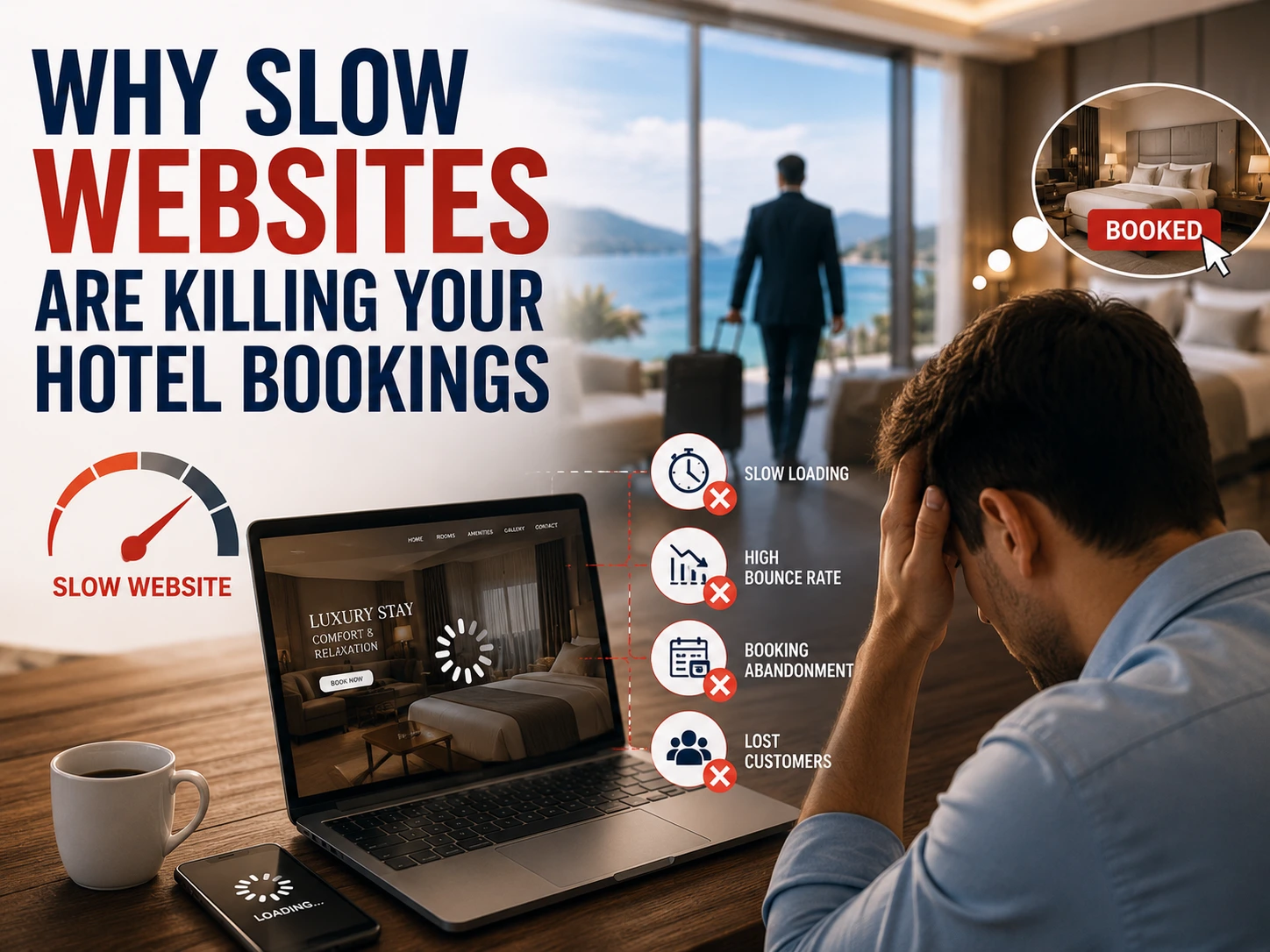
Why Slow Websites Are Killing Your Hotel Bookings & How To Fix It
In today's digital-first hospitality industry, your website is often the first interaction potential guests have with your property. Before a guest calls, emails, or visits your hotel, they usually visit your website to explore rooms, compare prices, check amenities, and make booking decisions.
However, many hotel owners overlook one critical factor—website speed.
A slow-loading website can frustrate visitors, increase bounce rates, reduce direct bookings, and negatively impact your search engine rankings. In an era where travelers expect instant information, even a few seconds of delay can cause potential guests to leave your website and book with a competitor instead.
Let's explore how slow websites impact hotel revenue and what hotels can do to improve performance in 2026.
1. First Impressions Are Made in Seconds
Travelers today have endless options available at their fingertips.
When a guest clicks on your website, they expect:
- Fast loading pages
- Smooth navigation
- Mobile-friendly browsing
- Instant access to room information
If your website takes too long to load, many users leave before viewing a single room.
Common reasons for slow hotel websites:
- Large image files
- Poor website hosting
- Outdated website design
- Excessive plugins and scripts
- Unoptimized booking engines
Remember, your website speed creates the first impression of your hotel's professionalism.
Key takeaway: A slow website can lose potential guests before they even explore your property.
2. Slow Websites Increase Booking Abandonment
A guest may be interested in booking your hotel, but if the booking process feels slow or complicated, they often abandon the journey.
Travelers expect:
- Fast page transitions
- Quick room availability checks
- Smooth payment processing
- Seamless mobile booking experiences
Every additional second of delay increases the likelihood of losing a booking. Common abandonment triggers:
- Slow booking engine performance
- Delayed page loading
- Broken website elements
Hotels investing heavily in marketing campaigns often lose conversions simply because their website cannot keep up with user expectations. Key takeaway: Website speed directly impacts conversion rates and booking revenue.
3. Google Rewards Faster Websites
Website speed is no longer just a user experience factor—it is also an SEO ranking factor. Google prioritizes websites that provide:
- Faster loading times
- Better mobile performance
- Smooth user experiences
- Strong technical optimization
A slow website can result in:
- Lower search rankings
- Fewer direct booking opportunities
- Reduced organic traffic
- Increased dependency on OTAs
If two hotels offer similar services, Google is more likely to rank the website that delivers a better user experience.
Key takeaway: Faster websites often achieve better visibility in search results.
4. Mobile Travelers Expect Instant Experiences
More than half of hotel searches now happen on mobile devices. Travelers often search for hotels while:
- Commuting
- Planning trips
- Comparing options
- Making last-minute bookings
Mobile users are especially sensitive to loading speed. Common mobile issues include:
- Oversized images
- Poor responsive design
- Slow booking forms
- Unoptimized website layouts
A website that performs well on desktop but struggles on mobile can lose a significant percentage of potential bookings. Key takeaway: Mobile optimization is no longer optional for hotels.
5. Slow Websites Push Guests Back to OTAs
One of the biggest goals for hotels today is increasing direct bookings. However, when guests experience a slow website, they often return to:
- Booking.com
- MakeMyTrip
- Agoda
- Goibibo
- Expedia
These platforms provide:
- Fast loading pages
- Easy booking processes
- Instant confirmations
As a result, hotels lose opportunities to acquire direct bookings and end up paying higher OTA commissions. A fast website helps hotels compete more effectively against major online travel platforms.
Key takeaway: Website speed plays a major role in reducing OTA dependency.
6. Fast Websites Improve Guest Trust
Guests often associate website quality with hotel quality. When visitors encounter:
- Fast page loading
- Professional design
- Easy navigation
- Smooth booking experiences
They are more likely to trust the property and complete a reservation. A modern website communicates:
- Professionalism
- Reliability
- Convenience
- Guest-focused service
Trust is one of the most important factors influencing online booking decisions. Key takeaway: Better website performance creates stronger guest confidence.
Key Takeaways
- Website speed directly impacts hotel bookings
- Slow websites increase bounce rates and booking abandonment
- Faster websites improve SEO performance
- Mobile optimization is critical for modern travelers
- Slow websites increase OTA dependency
- Better website experiences improve guest trust and conversions
- Website performance is a revenue-driving factor, not just a technical issue
Conclusion
In 2026, hotel websites are no longer just online brochures—they are powerful sales and marketing tools. Every second of delay can result in lost bookings, reduced visibility, and lower revenue.
Travelers expect instant access to information, seamless browsing, and frictionless booking experiences. Hotels that fail to meet these expectations risk losing potential guests to competitors and OTAs.
By investing in website speed optimization, mobile responsiveness, and user experience improvements, hotels can increase direct bookings, strengthen guest trust, and maximize marketing ROI.
A faster website doesn't just improve performance—it directly contributes to business growth.
How Hospitality Minds Can Help
At Hospitality Minds, we help hotels build high-performing websites designed to attract visitors and convert them into paying guests. Our hotel website development solutions focus on speed optimization, mobile responsiveness, SEO best practices, booking engine integration, and user experience improvements.
Whether you're launching a new hotel website or upgrading an existing one, our team ensures your digital presence supports direct booking growth and long-term revenue success. From website development to digital marketing and revenue management, Hospitality Minds provides end-to-end solutions designed specifically for the hospitality industry.