Dynamic Pricing Strategies Every Hotel Should Use in 2026: A Complete Guide
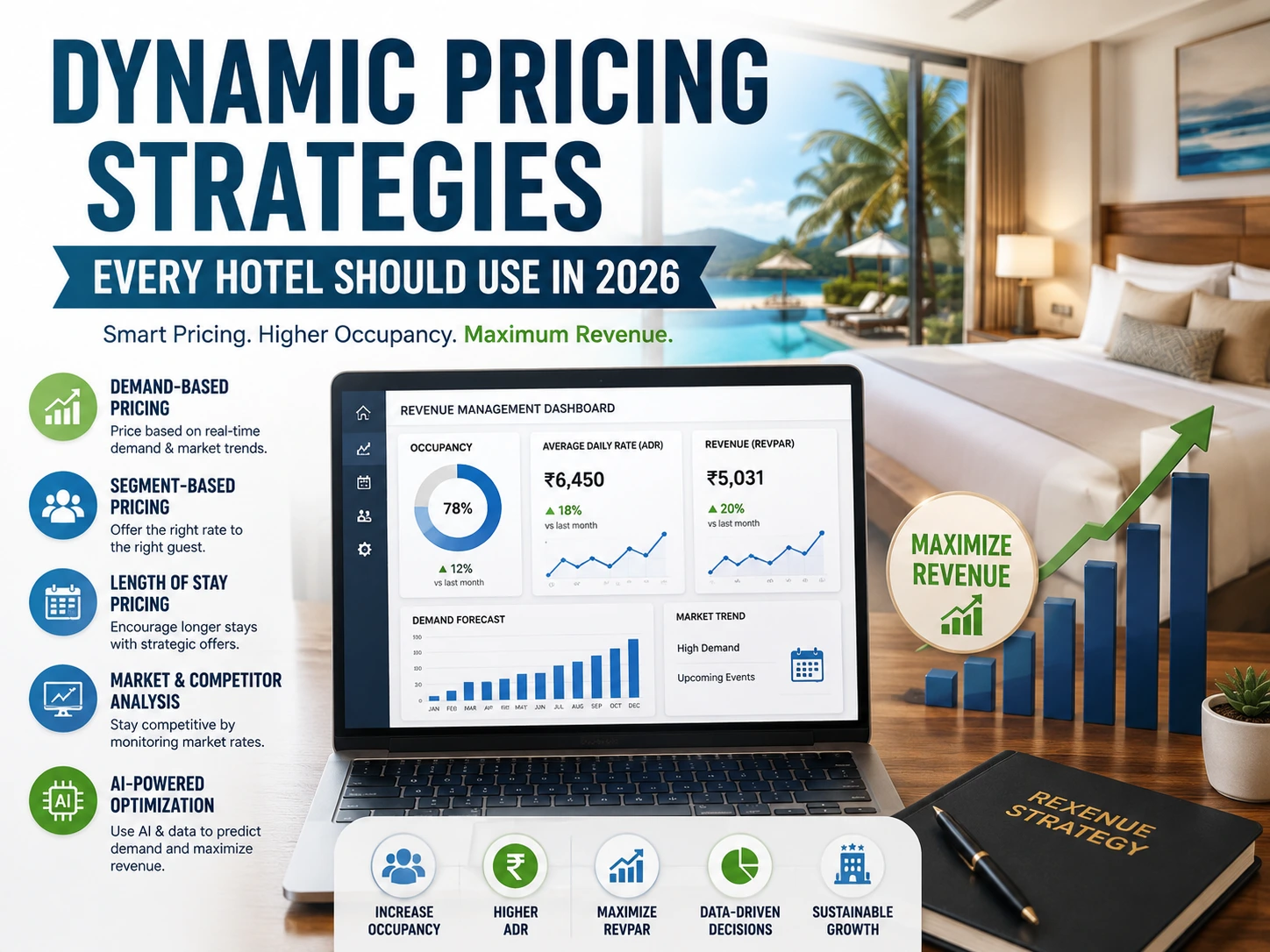
The hospitality industry is becoming increasingly competitive, and static room pricing is no longer enough to maximize revenue. Guest booking behavior changes daily based on demand, events, competitor pricing, seasonality, and online trends.
Hotels that continue using fixed room rates often leave significant revenue on the table. On the other hand, properties that implement dynamic pricing strategies can increase Average Daily Rate (ADR), improve occupancy, and maximize RevPAR without relying heavily on discounts.
In this guide, we'll explore the most effective dynamic pricing strategies hotels should adopt in 2026 to stay competitive and profitable.
1. Demand-Based Pricing
Demand-based pricing is the foundation of modern revenue management.
When demand increases, room rates should rise. During low-demand periods, rates can be adjusted strategically to maintain occupancy.
Factors that influence demand include:
- Local events and festivals
- Corporate travel demand
- Holidays and long weekends
- School vacations
- Flight and transportation trends
For example, if a major exhibition is scheduled near your hotel, waiting until rooms start filling up is too late. Rates should be adjusted proactively based on anticipated demand.
Key takeaway: Price should follow demand, not occupancy alone.
2. Competitor-Based Pricing
Your competitors influence guest booking decisions every day. Hotels should regularly monitor:
- Nearby hotel rates
- Room availability
- Promotions and packages
- OTA rankings
However, blindly copying competitor pricing can be dangerous. Instead:
- Identify your competitive set
- Understand your property's strengths
- Price according to value offered
A hotel with stronger reviews and better facilities can often command higher rates than competitors.
Key takeaway: Monitor competitors but price according to your property's value proposition.
3. Segment-Based Pricing
Not all guests have the same booking behavior. Different customer segments require different pricing strategies. Common hotel segments include:
- Corporate travelers
- Leisure travelers
- Group bookings
- Wedding guests
- Long-stay guests
For example, corporate travelers often book closer to arrival dates and prioritize convenience, while leisure guests typically book earlier and are more price sensitive.
Creating tailored pricing plans for each segment can significantly improve revenue performance.
4. Length of Stay Pricing
Encouraging longer stays can improve occupancy and operational efficiency. Hotels can offer:
- Stay 3 Pay 2 offers
- Weekly stay discounts
- Extended stay packages
- Workcation packages
Benefits include:
- Reduced housekeeping costs
- Higher overall revenue
- Increased guest retention
- Better inventory utilization
Instead of discounting single-night stays, hotels can strategically reward longer bookings.
5. Dynamic OTA Pricing Strategy
Online Travel Agencies remain one of the largest booking channels for hotels. However, many hotels make the mistake of offering identical pricing across all channels without strategy. Best practices include:
- Monitoring OTA demand patterns
- Using limited-time promotions
- Participating in high-performing OTA campaigns
- Optimizing room inventory allocation
A well-managed OTA strategy can improve visibility while maintaining profitability.
Remember: OTA pricing should support revenue goals, not control them.
6. AI-Powered Revenue Management
Artificial Intelligence is transforming hotel pricing decisions. Modern revenue management tools can analyze:
- Historical booking data
- Market demand
- Competitor pricing
- Booking pace
- Event calendars
AI systems help hotels make faster and more accurate pricing decisions than manual processes. Benefits include:
- Better forecasting
- Reduced human error
- Faster rate adjustments
- Increased revenue opportunities
Hotels that embrace technology-driven pricing are likely to outperform competitors in 2026 and beyond.
Key Takeaways
- Dynamic pricing increases ADR and RevPAR
- Demand should drive pricing decisions
- Monitor competitors without blindly matching rates
- Create segment-specific pricing strategies
- Encourage longer stays through targeted offers
- Optimize OTA pricing and inventory allocation
- Use AI-powered revenue management tools for smarter decisions
Conclusion
The hospitality industry is evolving rapidly, and guest booking behavior is becoming increasingly dynamic. Fixed pricing models can no longer deliver maximum profitability.
Hotels that implement demand-based pricing, competitor analysis, segment-focused strategies, and AI-powered revenue management will be better positioned to maximize revenue while maintaining healthy occupancy levels.
In 2026, successful hotels will not simply sell rooms—they will sell the right room at the right price to the right guest at the right time.
How Hospitality Minds Can Help
At Hospitality Minds, we specialize in helping hotels maximize revenue through strategic pricing and distribution management. As a leading hotel revenue management company, our team monitors market demand, competitor pricing, OTA performance, and booking trends to create customized revenue strategies for hotels and resorts.
From dynamic pricing implementation and OTA management to forecasting and inventory optimization, we help properties increase profitability while maintaining strong occupancy. If you're looking to improve your hotel's revenue performance, Hospitality Minds can help you build a sustainable growth strategy for 2026 and beyond.