Booking.com Discovery Event 2026: 5 Hotel Marketing Shifts Indian Hoteliers Should Act On
By the Hospitality Minds Team | Hotel Marketing Company
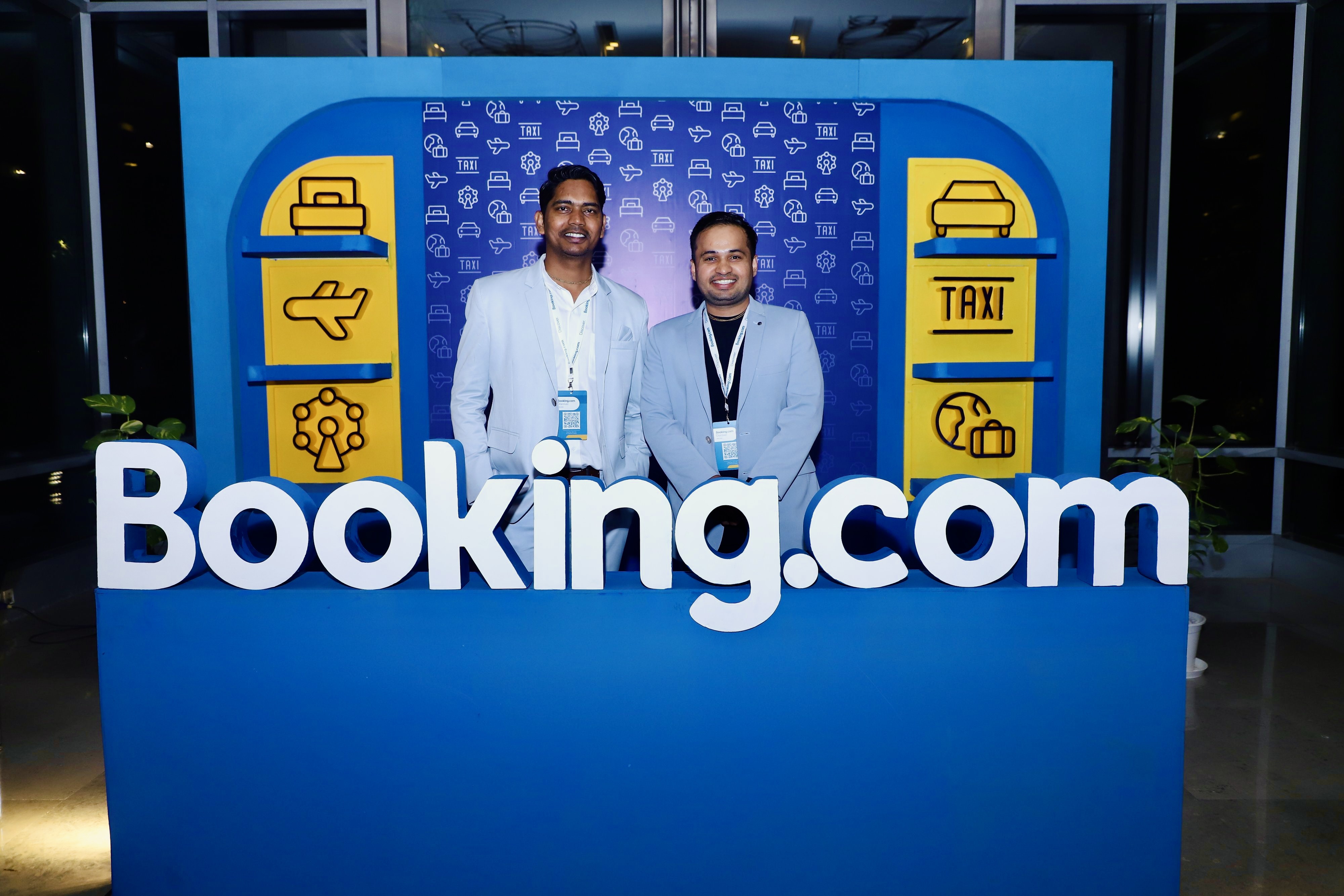
Guests now decide where to stay long before they reach your website, and the places where they decide are changing fast. That is why our team attended the Booking.com Discovery Event on 15 October 2026 at Andaz by Hyatt, where hoteliers, revenue managers and marketers came together to talk about where hospitality is heading.
Three themes ran through the sessions: the rise of alternative accommodation, simpler payments, and AI reshaping how travellers discover hotels. Read with the research Booking.com published around the event, they add up to a clear picture of hotel marketing trends in India for 2026. Below is what each shift means for your visibility, your content and your bookings, and what we would do about it.
Shift 1: Travellers Now Compare You Against Villas, Homestays and Apartments
Alternative accommodation is no longer a niche. It makes up 37% of Booking.com’s bookings globally. In India, the platform’s alternative listings have grown from just over one lakh three years ago to 2.15 lakh, and the category is about 13% of lodging gross booking value. Booking.com’s How India Travels 2026: The Homes Edit found that 62% of consumers compared alternative stays against hotels on their latest leisure trip.
For marketing, the point is simple: your property is now judged next to a villa with a kitchen or a serviced apartment, not only the hotel down the road. A generic description and a few stock-style photos will not hold up in that comparison.
What to do
Decide what you offer that an alternative stay cannot: location, consistent service, safety, a team available around the clock, on-site dining.
Say it clearly in your listing copy, website headlines and photo captions.
Create pages and offers for the guests most likely to compare: families, groups, longer stays and business travellers.
Shift 2: Payments Are Part of the Guest Experience, Not Just Back-Office
The event also covered Payments by Booking.com. The idea running through it is that a smoother payment step makes travel feel more seamless. Booking.com’s own developer documentation lists the cost of poor payment handling: checkout drop-off, an inconsistent experience, post-booking disputes and lost trust.
This matters for marketing because every campaign, listing and ad ends at a checkout. If that last step is clumsy, the money spent bringing the guest there is wasted.
What to do
Check which payment options are active on each channel and make sure they are there by choice, not by default.
Keep payment and cancellation terms identical and easy to understand on your website and every OTA.
Test your own website’s booking journey on a phone. Count the taps between “Book now” and confirmation.
Shift 3: AI Is Now Shortlisting Hotels Before Guests See Your Website
India is one of the most AI-positive travel markets. In Booking.com’s Global AI Sentiment Report, 99% of Indian respondents said they are excited about AI and 87% have already used it for some part of travel, mostly to research destinations and timing, find local experiences and get restaurant tips. Indian travellers also trust AI assistants (45%) more than influencers (31%) as a planning source.
When an assistant builds the shortlist, your hotel has to be understood correctly. The tool reads your description, amenities, room names, reviews and policies, then decides whether you match a request such as “a quiet hotel near the office for a three-night business trip”.
What to do
Fill every amenity field and name room types so the difference between them is obvious.
State facts a guest or an AI tool can match: distance to the business district, airport or beach, work desk, parking, breakfast timings.
Add an FAQ section to your website that answers real traveller questions in plain language.
Keep information consistent across your website, Google Business Profile and every OTA.
Shift 4: Guests Let AI Narrow the List, Then Check for Themselves
Trust in AI is still limited. Only 16% of Indian respondents fully trust it and 38% double-check what it tells them. In practice, guests use AI to cut a long list down, then confirm with reviews, photos and your own website.
So your content has to pass two tests: it must be clear enough to get you into the shortlist, and honest enough to hold up when the guest checks. Photos that match the real rooms, recent reviews with thoughtful replies and a website that agrees with your OTA listings all do that work.
What to do
Refresh photos so they show the property as it is today.
Reply to reviews promptly and specifically, including the critical ones.
Treat your website as the guest’s final check and make sure it is the most complete source of information about your hotel.
Shift 5: Hoteliers See Marketing as AI’s Strongest Use, but Execution Is the Gap
Booking.com’s India Accommodation Barometer 2026 shows an optimistic industry: 75% of Indian hoteliers expect positive business development. When asked where AI is very helpful, 53% pointed to marketing and communications and 51% to customer service. The barriers they named were integration complexity (36%), implementation cost (35%) and unclear return (35%).
That gap between belief and action is where many independent hotels lose ground. The answer is rarely another tool. It is a clear plan, one or two use cases and someone accountable for results.
What to do
Pick one AI use case: listing content, review responses or campaign content.
Set one measurable goal for it, such as direct enquiries, listing conversion or review response time.
Keep a person responsible for checking accuracy before anything goes live.
Your 30-Day Action Plan After the Event
Week 1: Audit your listings, website and Google profile against each other. Fix every mismatch.
Week 2: Rewrite your property description and room names around facts guests search for.
Week 3: Review payment options and your website’s mobile booking journey.
Week 4: Publish an FAQ page and set up a simple routine for photos and review replies.
The future belongs to hotels that prepare for change rather than react to it. If you also want the pricing and distribution view of the same event, our sister team at RevAlpha has written revenue management lessons from the Booking.com Discovery Event.
Thank You, Booking.com
Thank you to Laura Houldsworth, Santosh Kumar, Arun Ashok, Dhanik Kaklotar, Robbi HemantKumar and the Booking.com team for organising an insightful event and bringing the hospitality community together.
Make Your Hotel Easier to Find, Trust and Book With Hospitality Minds
Hospitality Minds is a hotel marketing company that helps hotels get found, chosen and booked online. We can help you:
Improve search engine visibility with hotel SEO
Write listing, website and FAQ content that guests and AI tools can understand
Strengthen your presence on OTAs such as Booking.com
Build a direct-booking journey that converts on mobile
Plan campaigns, photos and review management around your strengths
Ready to prepare your hotel for the next generation of travellers? Talk to Hospitality Minds
Frequently Asked Questions
When was the Booking.com Discovery Event 2026 held?
On 15 October 2026 at Andaz by Hyatt. The main themes were alternative accommodation, payments and AI in travel.
How does alternative accommodation affect hotel marketing?
Travellers now compare hotels with villas, homestays and apartments. Hotels need to state clearly what they offer that these cannot, such as location, service and safety.
How is AI changing hotel discovery in India?
Around 87% of Indian travellers have used AI for some part of travel. Hotels need complete, accurate and consistent content so AI tools can match them to the right guests.
Do payment settings matter for hotel marketing?
Yes. Checkout friction can undo the work of a good listing or campaign, so payment options and policies should be clear and consistent across channels.
What should a hotel do first?
Audit your website, Google profile and OTA listings so they agree, then rewrite your descriptions around facts guests search for.
How can a hotel marketing company help?
By handling SEO, content, OTA presence, photos, reviews and campaigns, so your hotel is found and trusted at each step of the guest’s decision.