How AI Search Is Changing Hotel Marketing in 2026
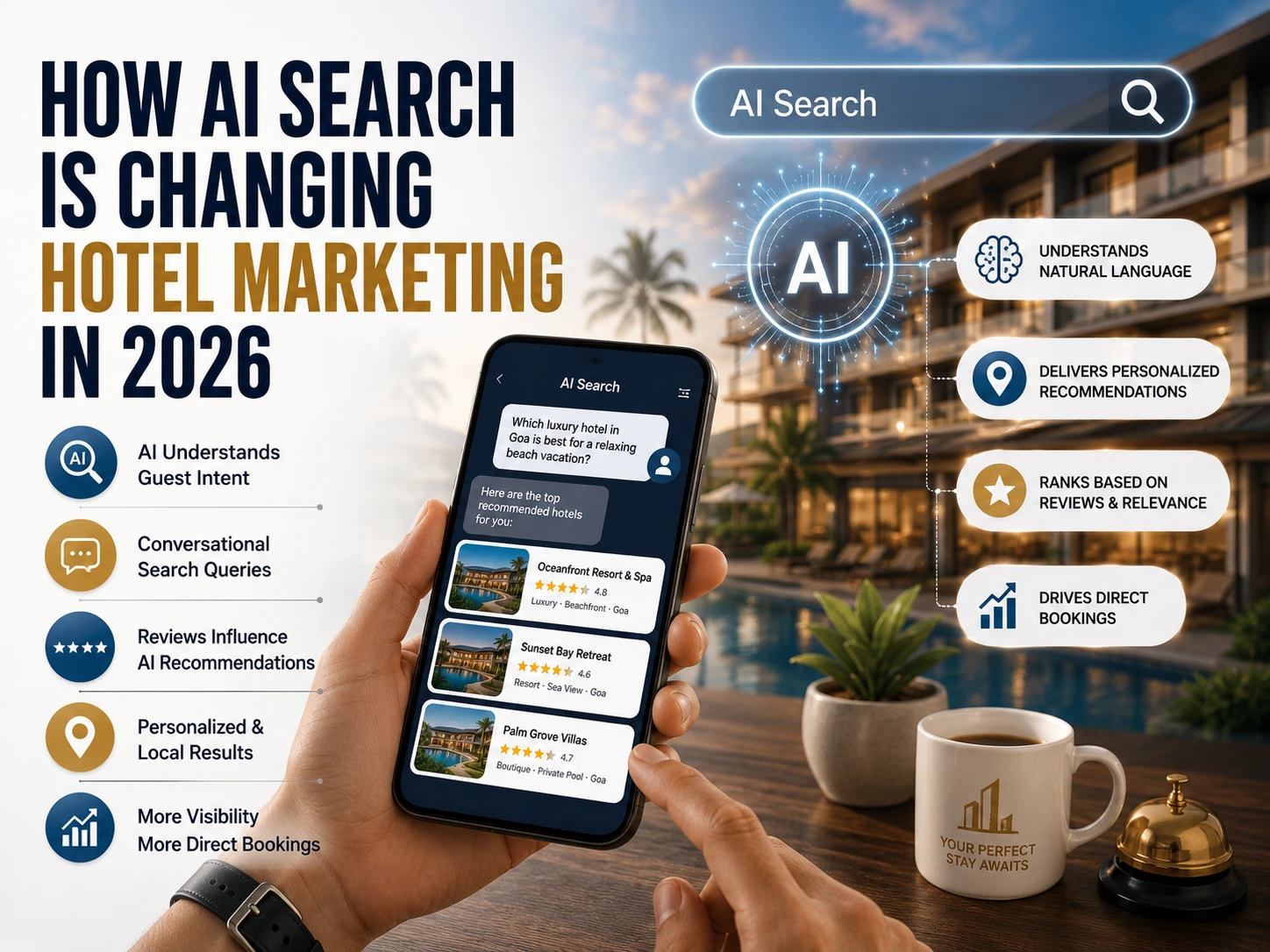
The way travelers search for hotels is changing rapidly. Traditional search engines are evolving with Artificial Intelligence (AI), and travelers are increasingly relying on AI-powered tools to discover destinations, compare hotels, and make booking decisions.
Instead of typing simple keywords like "best hotel in Goa," users are now asking detailed questions such as "Which beachfront resort in Goa is best for families with kids?" AI search engines provide direct answers, personalized recommendations, and curated results.
For hoteliers, this shift presents both challenges and opportunities. Hotels that adapt their marketing strategies to AI-driven search behavior will gain more visibility, attract qualified guests, and increase direct bookings.
Let's explore how AI search is changing hotel marketing in 2026 and what hotels should do to stay competitive.
1. Search Queries Are Becoming More Conversational
Traditional SEO focused heavily on short keywords and exact-match phrases. AI search is changing this behavior.
Today's travelers ask complete questions such as:
- Best luxury hotel near Mumbai Airport
- Family-friendly resorts in Lonavala with swimming pool
- Boutique hotels for couples in Udaipur
- Hotels near corporate hubs in Bangalore
AI platforms understand intent rather than just keywords. What this means for hotels:
- Create content that answers guest questions
- Focus on destination-specific topics
- Publish blogs that solve traveler problems
- Build content around guest intent
Hotels that provide useful and detailed information are more likely to appear in AI-generated recommendations. Key takeaway: Focus on answering questions, not just targeting keywords.
2. Website Content Matters More Than Ever
Many hotel websites still contain basic information about rooms and amenities. In the AI era, that's no longer enough. AI systems evaluate website content to understand:
- Property offerings
- Guest experience
- Location advantages
- Nearby attractions
- Unique selling points
Hotels should create content that helps travelers make decisions. Examples include:
- Local travel guides
- Event and festival guides
- Things to do near the hotel
- Corporate travel recommendations
The more relevant information your website provides, the more likely AI systems will consider it a trustworthy source. Key takeaway: Informative content improves both search visibility and guest engagement.
3. Online Reviews Have Become Stronger Ranking Signals
AI search platforms analyze reviews to understand guest satisfaction and overall reputation. Positive reviews help AI systems determine:
- Service quality
- Cleanliness
- Food quality
- Guest experience
- Value for money
This means reputation management is no longer just about brand image—it directly impacts visibility. Hotels should:
- Encourage guest reviews
- Respond to all reviews professionally
- Address negative feedback promptly
- Monitor review platforms regularly
A hotel with strong reviews often receives more visibility than competitors with larger marketing budgets. Key takeaway: Guest feedback has become one of the strongest digital marketing assets.
4. Direct Booking Strategies Are Becoming More Important
AI search is helping travelers discover hotels directly rather than relying entirely on Online Travel Agencies (OTAs). When a hotel's website provides:
- Fast loading speed
- Mobile-friendly design
- Detailed information
- Easy booking process
AI search platforms are more likely to recommend it. Benefits of increasing direct bookings:
- Lower commission costs
- Better guest relationships
- Higher profitability
- Greater control over customer data
Hotels should ensure their website and booking engine deliver a seamless user experience. Key takeaway: Direct booking optimization is essential for future growth.
5. AI Search Rewards High-Quality Visual Content
Travel remains a highly visual industry. AI-powered platforms increasingly evaluate:
- Website images
- Videos
- Social media content
- User-generated content
Professional photography and video content help both travelers and AI systems understand your property better. Best practices include:
- Use high-quality room photographs
- Showcase amenities and experiences
- Create short-form video content
- Regularly update visual assets
Hotels with compelling visual content often enjoy higher engagement and conversion rates. Key takeaway: Visual storytelling influences both AI visibility and booking decisions.
6. Local SEO Is More Important Than Ever
AI search heavily relies on local relevance. Travelers often search for:
- Hotels near airports
- Hotels near tourist attractions
- Business hotels near corporate offices
- Resorts near weekend destinations
To improve local visibility:
- Optimize Google Business Profile
- Maintain accurate business information
- Collect local reviews
- Create destination-focused content
- Use location-specific keywords naturally
Strong local SEO helps hotels appear in AI-generated recommendations for travelers planning trips.
Key takeaway: Local relevance significantly impacts AI search visibility.
Key Takeaways
- AI search focuses on user intent rather than simple keywords
- Conversational content is becoming increasingly important
- Informative websites gain better visibility
- Online reviews influence AI recommendations
- Direct booking optimization improves profitability
- High-quality images and videos boost engagement
- Local SEO remains critical for hotel discovery
Conclusion
AI search is reshaping the hospitality marketing landscape. Travelers now expect personalized recommendations, instant answers, and trustworthy information before making booking decisions.
Hotels that continue relying only on traditional SEO and OTA visibility may struggle to compete in the coming years. Instead, successful properties will focus on creating valuable content, maintaining strong online reputations, improving direct booking experiences, and investing in local SEO.
As AI-powered search continues to evolve, hotels that adapt early will gain a significant competitive advantage and attract more high-intent travelers.
How Hospitality Minds Can Help
At Hospitality Minds, we help hotels stay ahead of changing digital trends through strategic hotel marketing solutions. As a specialized Hotel Marketing Agency, we assist hotels in improving search visibility, strengthening their online presence, optimizing websites for direct bookings, and implementing data-driven digital marketing strategies.
From SEO and content marketing to reputation management and website optimization, our team helps hotels adapt to the future of AI-powered search while driving measurable business growth. If you're looking to increase visibility, attract quality guests, and maximize direct bookings, Hospitality Minds can help you build a future-ready marketing strategy.